

Your spouse bought the thing they said they wouldn’t, then invented a reason it was the smart choice. Your son drove faster than he should, then told himself he’s a safe driver because the pack was driving fast. Your neighbor supports abundant housing until a developer wants to build apartments nearby.
When a belief and a behavior clash, it’s our nature to come up with justifications. We justify doing something and we justify not doing something, and we’re really good at telling ourselves a story that aligns with our core principles. It’s easy to spot in other people, but not something any of us wants to admit about ourselves. (Psychologists call this the bias blind spot—another embarrassing part of our human nature.)
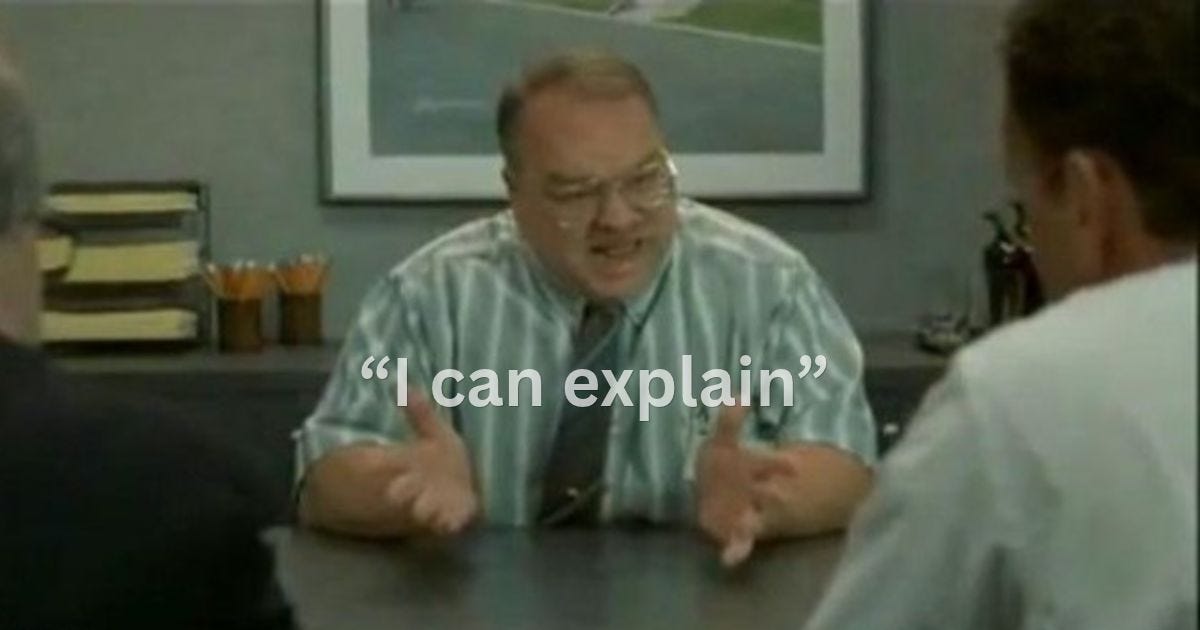
You and I are interested in culture change, which of course involves getting groups of people to change their behavior. They may or may not change their stated beliefs, and who cares, as long as behavior changes.
Advertisers and marketers have been tapping into cognitive dissonance for decades. They know that if they come up with the right story, potential customers will glom onto that and use it to justify buying a product or service.
In the 50s, a social psychologist had people rate the appeal of several household appliances. He would then show them two appliances they ranked about the same and let them choose one of the two products to keep. Later, after the choice, they rated the appliance they picked higher than before.
In the 60s, researchers asked people at a racetrack how confident they were that their chosen horse would win. Those waiting in line to place their bets were less confident than people who had already bet. The act of placing the bet increased confidence even though nothing about the race had changed.
In the 70s, L’Oréal’s Preference hair color was more expensive than its competitors and many women hesitated to waste money on beauty products, especially in a tough economy. Instead of lowering the price, L’Oréal introduced the brilliant marketing tagline “Because you’re worth it.” Sales went through the roof and they became the leading hair color brand within 10 years. “Because you’re worth it” is one of the most successful advertising campaigns because it tapped into cognitive dissonance by reframing spending more as an act of self-respect rather than extravagance.
In the 2020s, we’re faced with cognitive dissonance that holds back progress in all sorts of important ways. I’ll give you two to think about.
Housing scarcity
Liberals who promote fairness and equal opportunity will support abundant housing in the abstract. More places for people to call home and less exclusion for people who have low or moderate incomes. When a duplex (or God forbid an apartment building) is proposed on their street, they start talking about traffic, parking, school crowding, neighborhood character, and property values.
Conservatives who believe in strong property rights will say homeowners should be free to build on their own land and that government restrictions on that freedom should be limited. But they’ll turn around and endorse zoning rules that prevent neighbors from exercising their property rights.
The cumulative effect is a chronic shortage of homes, higher prices and rents, longer commutes, and fewer choices for people looking for a place to live.
Traffic violence
Speed is the fundamental factor in severe crashes, because the human body can only handle so much of an impact. Every day, over 100 people are killed in traffic crashes in America alone. Researchers have found that the vast majority of people rate themselves as above average drivers. But bring up speed limits, and all sorts of justifications pop up for driving dangerously: the speed limit is too low, police don’t really enforce it, everyone else is already going faster, I’m late but in control. A person will come up with justifications for driving dangerously so they can continue believing they’re safer than most.
The same self-justifying nature leads people to oppose transportation projects that would improve public safety: skinnier lanes, speed tables, protected bike lanes, bus lanes, roundabouts, etc. Each one of those improvements collides with the driver’s immediate convenience and self-image as a competent operator.
Cognitive dissonance is one explanation for the way people justify doing what they already want to do. When a belief and a behavior clash, the behavior usually wins. When you want to change how people drive or what land use policies they support, you have to give them a story that makes the new behavior feel consistent with who they already think they are.
You can choose to ignore human nature, or work with it.
Suffer and Inconvenience might be the barrier. I'm trying to figure out how we present the good sides of safer streets such that the change is not seen as a loss of anything. For example: children could get themselves to school - less traffic, saved time, more independence. I'm just not eloquent enough to put it all together.
Okay, so how do we work with it? Everyone in our neighborhood wants safer streets, but they're unwilling to suffer any inconvenience when driving to make it happen.