

20th-century Americans abandoned human-scale design for car-oriented sprawl, swayed by masterful storytelling and propaganda. The Futurama exhibit at the 1939 New York World’s Fair, designed by Norman Bel Geddes for General Motors, was a massive ride-through model spanning over 35,000 square feet that depicted a utopian “City of Tomorrow” filled with sprawling highways, automated roadways, and cars as the centerpiece of modern life. It promised happiness, safety, freedom, and beauty through a car in every driveway. What started as a fringe idea became mainstream in a shockingly short time, with exhibits like this drawing millions and embedding car dependency into the American psyche.
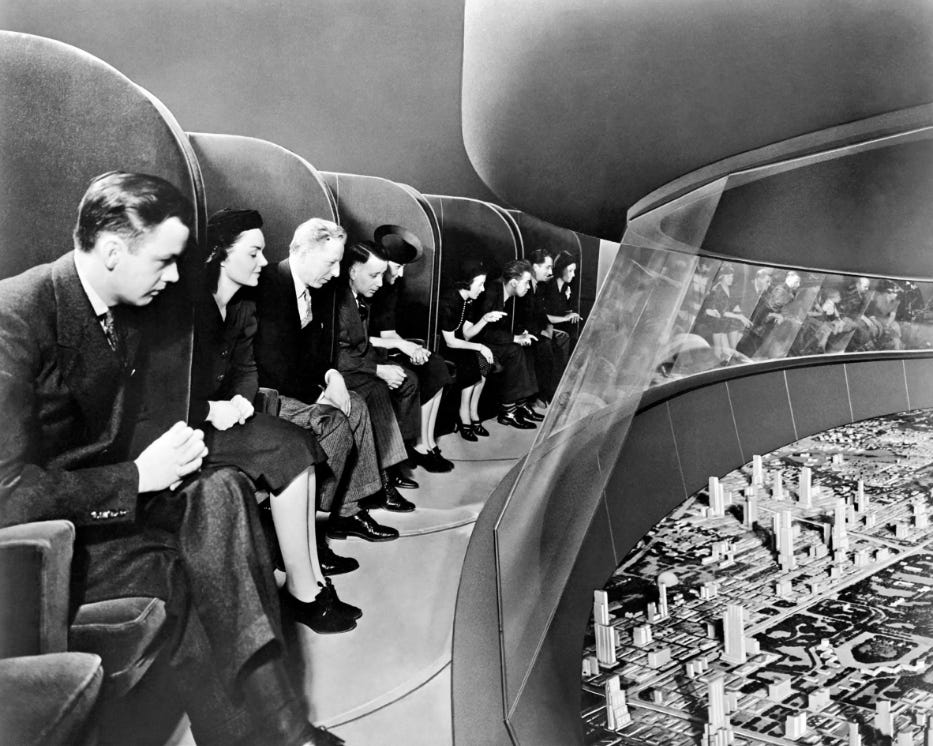
The cultural transformation happened because advocates sold a powerful vision of lifestyle upgrades, not through incremental tweaks but bold, aspirational narratives. They didn’t poll residents about whether they felt “interested but concerned” about automobiles. They showed them the future and made them want it.
Today’s planning profession has inverted that approach. Instead of selling a vision, we survey people about their willingness to adopt one. People self-identify based on current conditions, reflecting limited beliefs about what’s possible in America. The results are predictable.
In a bike-friendly California college city, a survey found 87% were either interested or confident in using a bicycle to get around. In a sprawly Texas city, only 54% were interested or confident in using a bike. A whopping 44% said no way they’d ride a bike.
Should we look at that Texas city and say “Well, 44% are okay with deadly streets”? No, of course not. You protect all human life. The goal is infrastructure that gives practical mobility options for everyone—even that 44% who say they won’t ever use a bicycle for transportation.
Children in Copenhagen today might think their surroundings have always been bike-friendly. But in the 1970s, Copenhagen looked like Anyplace, USA—streets clogged with cars, bike mode share down to just 10%.
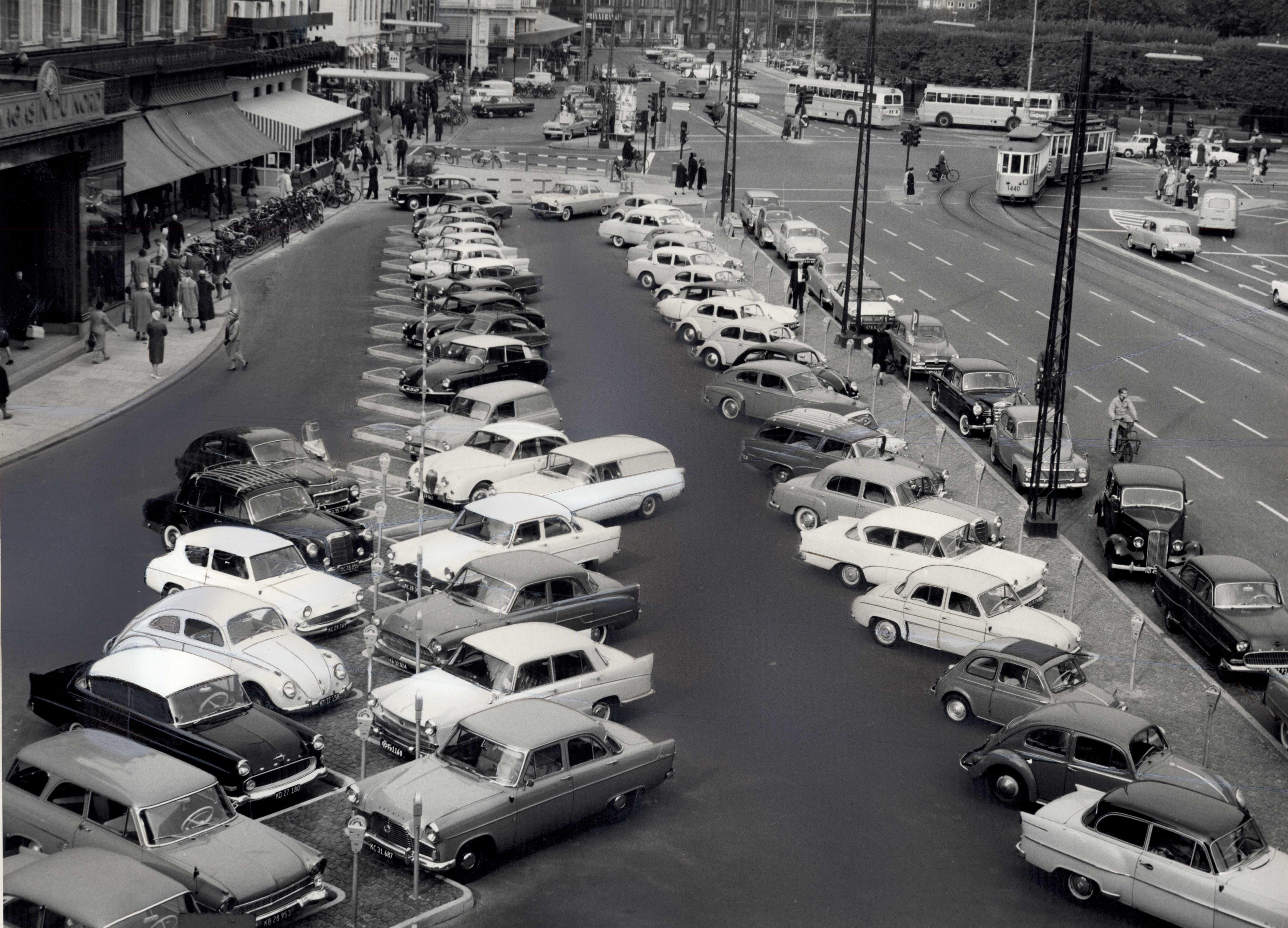
The transformation sparked from the 1973 oil crisis, which led to car-free Sundays, public protests against motorways, and a gradual shift back to cycling through dedicated infrastructure investments. It didn’t happen by surveying Danes about their comfort level with cycling.
We shouldn’t be aiming to nudge a few percentage points in public opinion. Our goal should be to make freedom of mobility so compelling that people demand it. Help people visualize (and demand!) a future where kids can bike to school, seniors can walk to the store, couples can bike to dinner, etc.
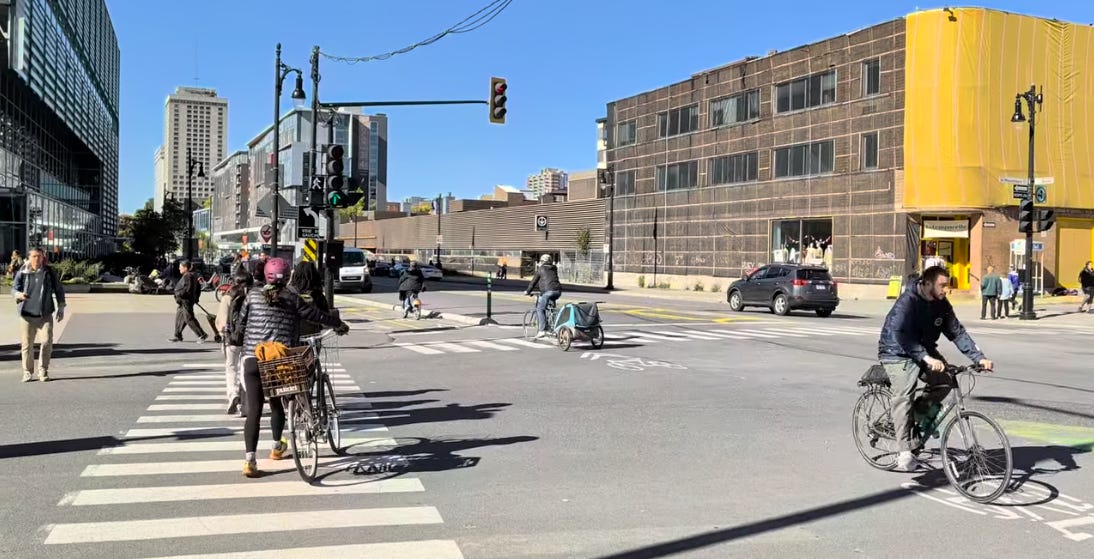
How great would it be if fifty years from now, North American kids think their cities have always been bike-friendly.
If Democrats want the wave election our democracy requires, they need a "big ideas" platform—not just outrage. That means rethinking Social Security so benefits can be received earlier in life, when family formation actually begins. Pair that with a national jobs program offering clear paths to the roles companies like Ford desperately need filled, and a robust abundance agenda that lets homes get built quickly.