Marketing is the art of helping people see familiar things differently, so they feel, believe, and act differently.
15 years ago, Coca-Cola did something remarkably simple in Australia. They took their iconic bottles and cans and replaced the classic logo with the country’s most popular first names. Suddenly, marketing a Coke wasn’t just about quenching thirst, it was about finding your name or gifting one to a friend. The campaign turned an everyday product into an emotional gesture. Australians hunted shelves for names, posted photos online, and shared bottles with loved ones. In a market of roughly 23 million people, Coca-Cola sold more than 250 million personalized bottles and cans. The campaign became one of the most successful in the company’s modern history and quickly expanded around the world.
Twenty years ago, some American utility companies were trying to get households to use less energy in order to meet their efficiency targets. Drawing on behavioral science research, companies began sending personalized home energy reports. These compared a household’s usage to similar neighbors and highlighted positive norms: “Most households in your area are saving energy by…” along with simple tips. Rather than scolding people, the messaging focused on what most people were already doing. They were tapping into the human desire to be one of the good neighbors. Across hundreds of thousands of households in large-scale randomized trials, the reports reduced energy consumption up to 6%. The program has been credited with billions of dollars in customer savings.
Thirty years ago, researchers wanted to see if a tiny shift in how they asked for help could change behavior. They approached people on a university campus and asked them to volunteer time for a simple task. When they made the straightforward request, only about 29% agreed. But when they first primed the emotional pump with “Do you consider yourself a helpful person?” and then made the same request, agreement jumped to 77%. By briefly reminding people of their own positive self-image, the researchers nearly tripled the number of helpers.
More than 2,300 years ago, Aristotle understood that the best way to move people to action involves three things working together: credibility, logic, and emotion.
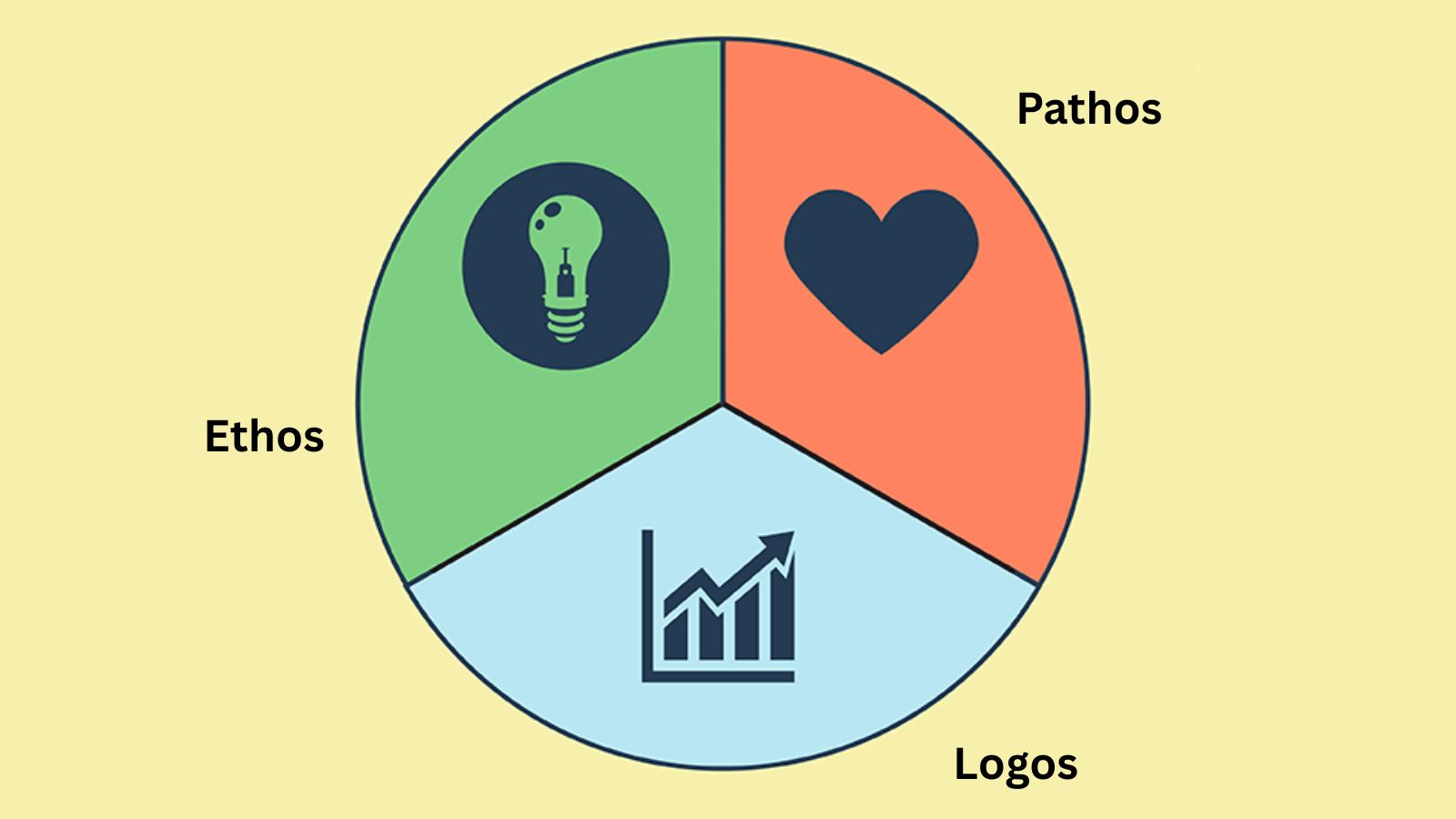
Ethos is about credibility through character. Aristotle said that people are more likely to be persuaded when they believe the speaker is knowledgeable, honest, and genuinely acting in their best interest. That could mean demonstrating both professional expertise (“I’ve studied this, designed this, walked these streets”) and moral character (“I’m committed to the public interest, not just one side or special interests”).
Logos is the clear, truthful case built on evidence and sound reasoning. Facts, data, and arguments that hold up under scrutiny. This is probably the most relied-on appeal made by planners and engineers because it’s the most straightforward. Even someone who hasn’t had the time to build a credible reputation (Ethos) can deliver evidence.
Pathos is the appeal to emotion, connecting with people’s hopes, fears, loves, hates, and sense of what matters. Aristotle knew that facts alone rarely move people to action. They need to feel why something matters to them, their family, or their neighborhood.
Most professional planners and engineers have a solid grasp on Ethos and Logos, but the Pathos is either overlooked or intentionally avoided. I don’t know if they realize it, but NIMBYs do a fantastic job at appealing to emotion. Maybe your community, like mine, is going through the process of updating its zoning code and you’ve heard Pathos messages like these:
“These changes will erase the neighborhood I raised my kids in.”
“They’re turning our quiet, tree-lined streets into something that doesn’t feel like home anymore.”
“I moved here for the small-town feel. Now they want to change the rules so strangers can build whatever they want next door.”
“Think of the families who’ve lived here for generations. This plan will destroy the community we’ve spent decades building together.”
“Our neighborhood isn’t broken. It doesn’t need fixing.”
On the other hand, people who support legalizing nice things are generally terrible at making appeals to emotion. Here are some examples of Pathos messages applied to land use reform:
“I’ve watched friends and family get priced out over the years. These changes finally give young people and working families a real chance to stay and build their lives here.”
“For the first time in decades, our neighborhood feels like it’s opening up instead of closing in. This is about creating room for new families to join the community we love.”
“I want my grandchildren to be able to walk to school and visit friends without needing to drive everywhere.”
“Our city has always been a place where people come to build better lives. Updating the rules so more people can do that honors what makes this community special.”
“I love this city because it gave my family a chance. Supporting these changes means giving the next generation the same opportunity I had.”
Things will get better in the end, but not if you just sit there with your mouth shut. Like any other habit, your Pathos messaging will improve with practice. The best results are when you find ways to combine all three appeals: credibility, evidence, and emotion.
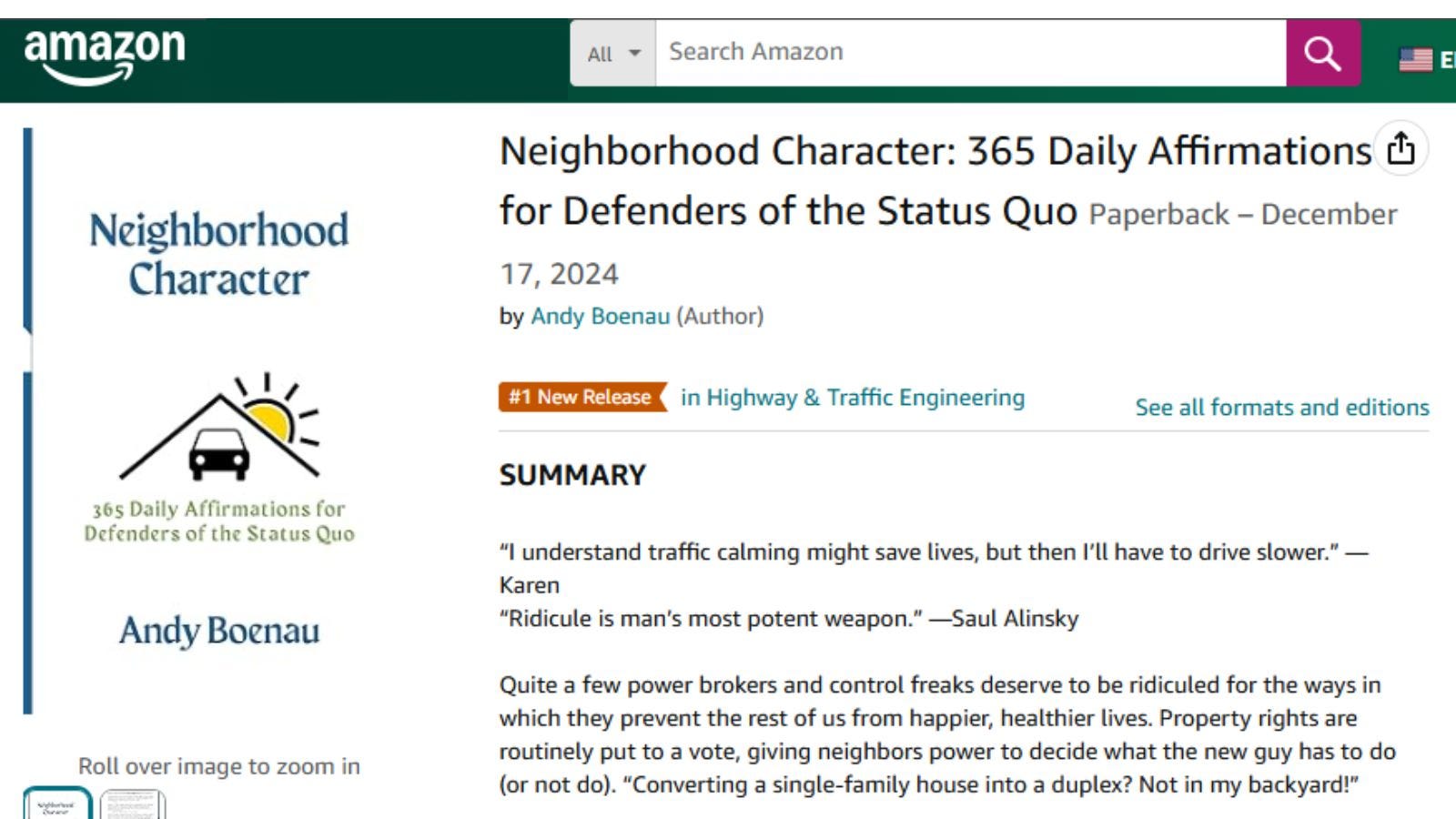
If you want to see one way that I practice in public, check out my book Neighborhood Character: 365 Daily Affirmations for Defenders of the Status Quo. For one glorious weekend, it was #1 in Highway & Traffic Engineering! Of course the book makes a mockery of control freaks and NIMBY activists, but I hope some of the affirmations feel painfully real and remind you just how important it is to understand and use persuasive tools.